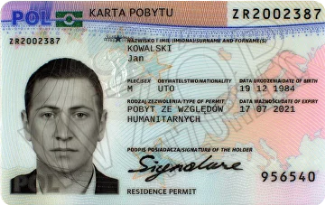
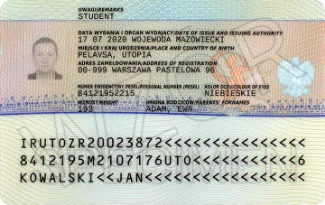
PERMANENT RESIDENCE CARD
Obtaining a long-term residence card (pobyt stały) is a reliable way to legalize your stay in Poland. This residence permit allows you to live and work permanently in Poland, cross borders without a visa, and enjoy all the rights of long-term residence.
What is a long-term residence card
Pobyt stały and the EU long-term resident card are permits that allow a foreigner to reside indefinitely in Poland. They are granted for an indefinite period and provide numerous rights and opportunities for foreigners.
Types of long-term residence cards:
-
Pobyt Stały – permanent residence permit;
-
Pobyt rezydenta długoterminowego UE – EU long-term resident permit.
LONG-TERM EU RESIDENCE PERMIT
What is a long-term EU residence permit
The long-term EU residence permit (EU long-term resident’s card) is a permit for permanent residence in Poland. The decision to issue a residence permit is made for an indefinite period of time. The card itself is valid for 5 years, which means that the card must be replaced every 5 years as part of the card replacement procedure. However, there is no need to reapply for a permit and go through the permit process. A long-term EU residence permit (EU long-term residence card) issued by Poland entitles the holder to travel to other Schengen countries. Nevertheless, the stay of a foreigner on this basis cannot exceed 90 days within 180 days. If a foreigner intends to stay in this country longer than the specified limit allows, he must legalize his stay in accordance with the rules in force in the country.
We speak
We speak
Grounds for Obtaining
Permanent Residence
Marriage to a Polish Citizen
The main requirement is to be married to a Polish citizen for at least 3 years. Continuous residence in Poland based on a temporary residence permit for at least 2 years, obtained on the basis of marriage to a Polish citizen.
Health insurance
Has health insurance within the meaning of the Act of August 27, 2004 on medical services financed from public funds, or confirmation that the insurer covers the costs of treatment in Poland.
Children of a Polish Citizen
The main requirements are that one of the child’s parents must be a Polish citizen, and the child must be a minor.
Persons of Polish Descent
The applicant must prove their Polish descent. This can be confirmed by documents showing that at least one of the parents, grandparents, or in the case of great-grandparents, two family members had Polish citizenship or Polish origin.
Holders of the Pole’s Card
The applicant must have a valid Pole’s Card, which confirms their Polish descent.
Residence in Poland based on refugee status or another form of international protection for at least 5 years.
The applicant must have resided in Poland based on international protection status for at least 5 years. The residence must be continuous, although short-term absences are allowed, not exceeding 6 months within a year or 10 months within 5 years.
Long-term EU resident stay
Continuous legal residence in Poland for a minimum of 5 years.
The applicant must reside in Poland without long interruptions. This means that during the 5-year period, the person can leave for no more than 6 months at a time or a total of 10 months within 5 years. Exceptions can be made for justified cases, such as prolonged medical treatment or business trips, but these need to be documented.
Having a stable and regular income that provides for the applicant and their family.
The applicant must have a permanent source of income ensured by regular payments. This can include a salary, income from business activities, a pension, or other legal forms of income. The income must be sufficient to cover all the living needs of the applicant and their family, including housing, food, medical services, and other essential expenses.
Medical Insurance
The applicant must provide a document confirming the existence of medical insurance. This can be:
- A health insurance policy (for private insurance)
- Documents from the employer confirming mandatroy health insurance (for employees)
- Certificates from the NFZ (National Health Fund) or other insurance companies about active coverage.
Having a place of residence in Poland
The applicant must provide documents confirming the existence of a place of residence. These can be:
- Rental agreement: A contract confirming the rental of an apartment or other accommodation.
- Ownership: Documents confirming property ownership.
Proof of Polish language proficiency at a level no lower than B1.
The applicant must prove their knowledge of the Polish language at a level that meets the established standards for that level. This can be demonstrated through:
- A certificate of Polish language proficiency at the B1 level.
- A diploma from a school in the Republic of Poland, in accordance with Article 2 of the Act of December 14, 2016, “On the Education System” (Dz. U. of 2023, item 900, 1672, 1718, and 2005) or
- A diploma from an educational institution as understood by the Act of July 20, 2018, “On Higher Education and Science” with instruction in Polish.
QUESTIONS AND ANSWERS
Visa-free stay in Poland is short-term and lasts no more than 90 out of 180 days. Border guards calculate the days of a foreigner’s stay for the last 180 days. Every 6 months (180 days), you can stay in the Schengen area for only 90 consecutive days or sum up the days of short-term stays.